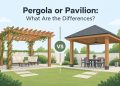

If you are planning to improve your backyard, patio, garden, or outdoor entertainment area, you may be deciding between a pergola and a pavilion. Both structures can create a more comfortable and attractive outdoor living space, but they are designed differently and serve different purposes.
The biggest difference between a pergola and a pavilion is the roof. A pergola typically has an open or partially open roof made with beams, slats, or louvers, while a pavilion usually has a fully covered, solid roof. Because of this, pergolas are often chosen for partial shade and architectural style, while pavilions are better suited for stronger weather protection.
Understanding the differences between a pergola vs pavilion can help you choose the right outdoor structure for your home, lifestyle, and budget.
What Is a Pergola?
A custom pergola is an outdoor structure typically supported by vertical posts or columns with beams, rafters, or louvers across the top.
Traditional pergolas have open roofs that allow some sunlight to pass through. Modern pergola designs may include fixed slats, retractable covers, or adjustable louvered roofs that give homeowners more control over sunlight and shade.
Pergolas are commonly built over:
- Patios
- Decks
- Outdoor dining areas
- Poolside spaces
- Garden seating areas
- Outdoor kitchens
- Walkways
A pergola is often used to define an outdoor space without making it feel completely enclosed.
What Is a Pavilion?
A pavilion is also a freestanding or attached outdoor structure, but it generally has a solid roof that provides full overhead coverage.
Pavilions usually have open sides, although privacy screens, curtains, walls, or other enclosures can sometimes be added.
Because the roof is fully covered, a backyard pavilion can provide more protection from sun and rain than a traditional pergola.
Pavilions are often used for:
- Outdoor kitchens
- Dining areas
- Large seating areas
- Poolside entertainment
- Backyard parties
- Outdoor fireplaces
- Televisions and entertainment systems
They are particularly popular when homeowners want to create an outdoor room that can be used in a wider range of weather conditions.
Pergola vs Pavilion: What Is the Main Difference?
The primary difference between a pergola and pavilion is the roofing system.
A pergola roof traditionally consists of open beams or slats. It provides partial shade while maintaining an open-air atmosphere.
A pavilion roof is solid and typically resembles a traditional house roof. Depending on the design, it may use shingles, metal roofing, tiles, or another waterproof roofing material.
That single difference can significantly affect how each structure looks, feels, and functions.
Shade and Weather Protection
One of the most important factors when choosing between a pergola or pavilion is the amount of weather protection you want.
Traditional pergolas provide partial shade rather than complete protection from the elements. Sunlight can still pass through the roof openings, and rain can generally enter the space.
However, modern adjustable louvered pergolas can provide considerably more protection. Some systems allow the louvers to close completely when additional shade or rain protection is needed.
Pavilions generally provide greater overhead coverage because they have solid roofs.
If your priority is creating a space that remains protected during sunny or rainy conditions, a pavilion may be the better choice.
If you prefer an open feeling with controlled sunlight and airflow, a pergola may be more suitable.
Appearance and Architectural Style
Pergolas and pavilions also create very different visual effects.
Pergolas usually have a lighter, more open architectural appearance. Their horizontal beams or louvers can add structure to a backyard without making the space feel enclosed.
Modern aluminum pergolas are especially popular for contemporary homes because they provide clean lines and a minimalist appearance.
Pavilions tend to look more substantial because of their solid roofs. They can resemble a detached outdoor room or extension of the house.
A traditional pavilion may feature wood posts and a pitched roof, while contemporary pavilion designs may use metal, stone, concrete, or other modern materials.
The right choice should complement the architectural style of your home.
Pergola or Pavilion for an Outdoor Kitchen?
Both structures can work well for an outdoor kitchen, but the best choice depends on how much coverage you need.
A pavilion is often preferred when homeowners want to protect cooking equipment, countertops, furniture, appliances, and dining areas from the weather.
A pergola can also work well for an outdoor kitchen, especially when equipped with a solid or adjustable louvered roof.
If you plan to install a grill, fireplace, or other heat-producing equipment underneath either structure, proper ventilation, clearances, and local building requirements should be considered during the design process.
Which Is Better for Outdoor Dining?
For outdoor dining, both pergolas and pavilions can create comfortable and attractive spaces.
A pergola provides an airy environment that still feels connected to the surrounding backyard. Adding lighting, curtains, landscaping, and comfortable furniture can make it feel like an outdoor dining room.
A pavilion offers more protection and may be preferable if you regularly entertain guests throughout the year.
Homeowners who want flexibility may prefer a louvered pergola because the roof can be adjusted depending on weather conditions.
Which Structure Offers More Natural Light?
Pergolas generally allow more natural light into the area underneath them.
Open rafters or adjustable louvers allow sunlight to filter through while still creating some shade.
This makes pergolas particularly appealing for areas where homeowners do not want the outdoor space—or nearby interior rooms—to become too dark.
Because pavilions have solid roofs, they block more direct sunlight. Lighting may therefore become more important underneath a pavilion, particularly during evenings or on cloudy days.
Can You Add Privacy to a Pergola or Pavilion?
Yes. Privacy features can be added to both structures.
Popular options include:
- Decorative privacy screens
- Outdoor curtains
- Retractable shades
- Vertical slats
- Trellises
- Tall planters
- Hedges and landscaping
- Partial walls
Pergolas often work particularly well with climbing plants and decorative screens because of their open architecture.
Pavilions can accommodate more substantial privacy solutions because of their larger roof structures.
What Materials Can Be Used?
Pergolas and pavilions are available in a variety of materials.
Wood
Wood provides a natural and traditional appearance. Cedar, redwood, and pressure-treated lumber are common choices for outdoor structures.
Wood typically requires periodic maintenance to protect it from moisture, sunlight, and insects.
Aluminum
Aluminum is commonly used for modern pergolas because it is durable, lightweight, and relatively low maintenance.
Powder-coated aluminum can also create a contemporary appearance.
Vinyl
Vinyl pergolas offer a clean look and usually require less maintenance than wood.
Steel
Steel may be used for larger or more contemporary structures where additional structural strength is required.
Pavilions frequently combine several materials, such as wood framing, stone columns, and metal or shingle roofing.
Which Is More Expensive: A Pergola or Pavilion?
The cost of either structure depends on its size, materials, design complexity, location, and additional features.
Traditional pergolas are often simpler because they do not require a complete roofing system.
Pavilions may cost more because they typically require more framing, roofing materials, drainage, and structural support.
However, premium motorized or louvered pergolas can also become significant investments.
Features such as lighting, fans, heaters, fireplaces, kitchens, electrical systems, motorized shades, and custom finishes will increase the total project cost for either option.
Do Pergolas and Pavilions Require Permits?
Permit requirements vary by location.
The size, height, foundation, roof type, attachment to the home, electrical installation, plumbing, and other features can determine whether permits are required.
Homeowners should check local building regulations and homeowners association requirements before beginning construction.
Professional contractors or pergola installers can often help determine which approvals are required.
Pergola vs Pavilion: Which One Should You Choose?
Choose a pergola if you want:
- An open-air outdoor living space
- Partial or adjustable shade
- More natural light
- A modern or architectural backyard feature
- Good airflow
- The flexibility of an adjustable louvered roof
Choose a pavilion if you want:
- A fully covered outdoor area
- Greater rain protection
- Stronger overhead shade
- An outdoor kitchen or entertainment room
- A more substantial permanent structure
- Space that feels more like an outdoor extension of the home
Neither option is automatically better. The best choice depends on how you plan to use the space.
Frequently Asked Questions About Pergolas and Pavilions
Is a pergola the same as a pavilion?
No. A pergola normally has an open, slatted, or adjustable roof, while a pavilion typically has a solid roof.
Which gives more shade, a pergola or pavilion?
A traditional pavilion generally provides more continuous shade because of its solid roof. A pergola provides partial shade, although modern adjustable louvered pergolas can provide significantly more coverage.
Can a pergola protect you from rain?
Traditional open-roof pergolas provide limited rain protection. Certain pergolas with solid covers or properly designed adjustable louvers can offer greater protection.
Is a pavilion better for an outdoor kitchen?
A pavilion can be a good option for an outdoor kitchen because its solid roof provides substantial overhead coverage. Pergolas with suitable roofing systems can also be used for outdoor kitchens.
Can a pergola be attached to a house?
Yes. Pergolas can be either attached to a home or built as freestanding structures, depending on the design and site conditions.
Create the Right Outdoor Living Space
When comparing a pergola or pavilion, think about how you want your outdoor space to function.
A pergola provides an open architectural design with natural light, airflow, and flexible shade options. A pavilion creates a more fully covered environment that offers stronger protection from the weather.
Both can transform a simple patio or backyard into a dedicated space for dining, relaxing, entertaining, or spending time with family and friends.
The best outdoor structure is the one that fits your home’s architecture, available space, climate, budget, and the way you plan to enjoy your backyard.